BankFive, a mutual bank with 17 locations in Massachusetts and Rhode Island, donated $75,000 to the Veterans Association of Bristol County (VABC) in Fall River to support the VABC’s programs and resources it provides to veterans of the U.S. Armed Forces and their families.
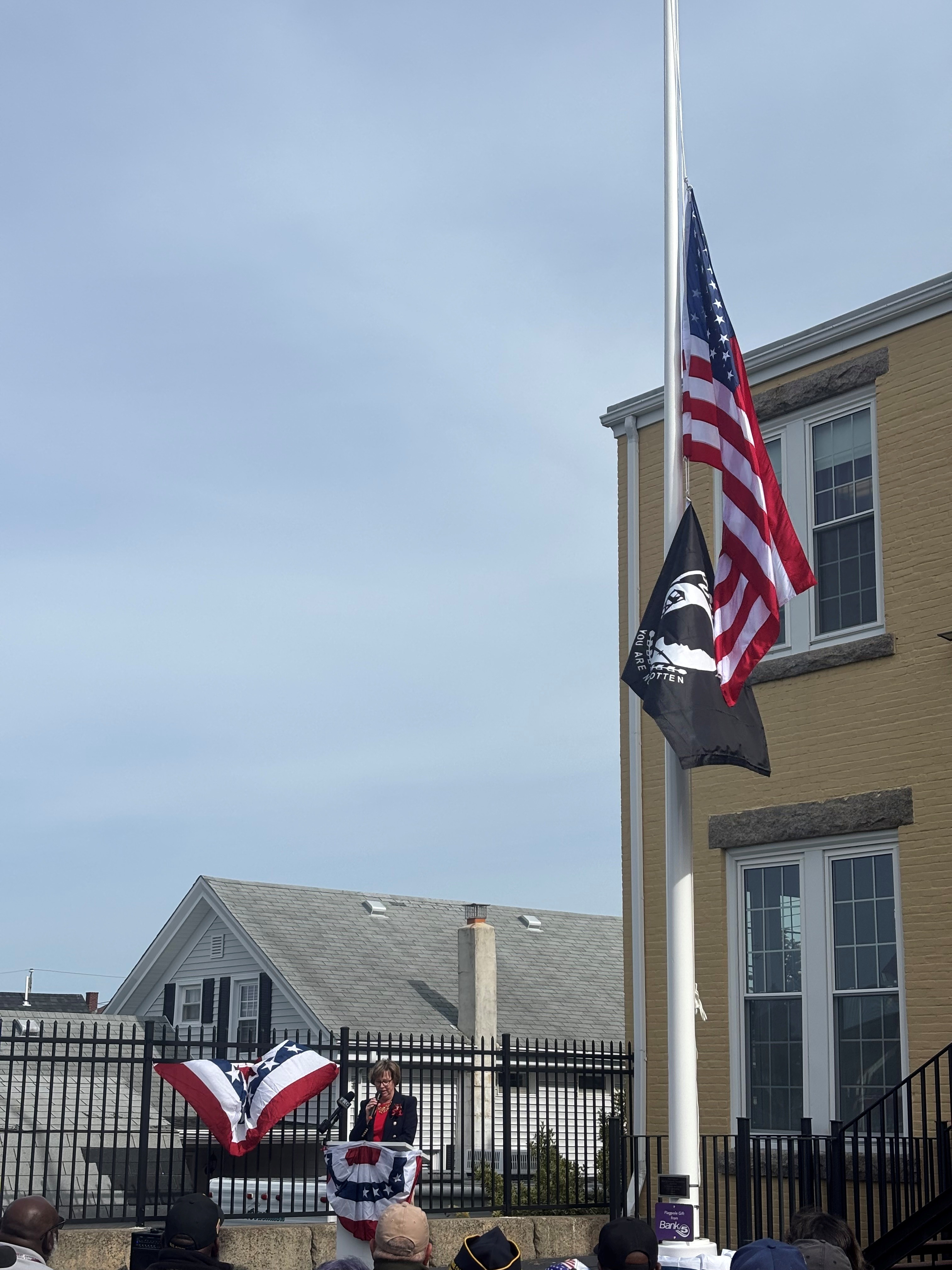
The donation was presented during the Bank’s fourth annual Flagpole Ceremony at the VABC’s new location on 145 Globe Street in Fall River. In combination with BankFive’s $25,000 donation to the VABC last year, BankFive has donated a generous total of $100,000 to support the organization’s ongoing capital campaign, which will help to fund renovations to its new building to better meet the needs of local veterans. BankFive also donated the newly installed flagpole at the new VABC headquarters.
The ceremony, ahead of Memorial Day on May 25th, honored local veterans from the VABC, Veterans Transition Home (VTH), and Rhode Island Veterans Home, representing service members from World War II to the Global War on Terrorism. Fall River Mayor Paul Coogan, Rep. Carole A. Fiola, Rep. Alan Silvia, and Cory Ahonen, Assistant Secretary of Engagement & Outreach at the Executive Office of Veteran Services in Boston were in attendance. In addition, Anne Tangen, President and CEO of BankFive, and Ken Levesque, Executive Director of the VABC, delivered remarks at the ceremony.
“As we approach Memorial Day, we are reminded that the freedoms and opportunities we enjoy every day were secured through the courage and sacrifice of our nation’s veterans,” said Anne Tangen, President and CEO of BankFive. “As a proud member of the Southcoast community, it is an honor for BankFive to support the important work of the Veteran’s Association of Bristol County, which provides vital resources, fellowship, and advocacy for those who have served our country.”
“We are deeply grateful for this generous donation and for BankFive’s continued commitment to Veterans Association of Bristol County,” said Ken Levesque, Executive Director of the Veterans Association of Bristol County. “Partnerships like this help us continue providing critical programs, services, and support to local veterans and their families throughout the year. Our capital campaign is still very much alive and we encourage others to follow the lead of BankFive in giving back to support the veterans who have served our nation.”
The donation was made through BankFive’s charitable giving program, reflecting the bank’s ongoing commitment to supporting the communities it serves in Massachusetts and Rhode Island. Through charitable giving, BankFive helps strengthen local organizations and initiatives that create positive impact, including programs focused on financial literacy, arts and culture, and community-based services.
The donation was presented during the Bank’s fourth annual Flagpole Ceremony at the VABC’s new location on 145 Globe Street in Fall River. In combination with BankFive’s $25,000 donation to the VABC last year, BankFive has donated a generous total of $100,000 to support the organization’s ongoing capital campaign, which will help to fund renovations to its new building to better meet the needs of local veterans. BankFive also donated the newly installed flagpole at the new VABC headquarters.
The ceremony, ahead of Memorial Day on May 25th, honored local veterans from the VABC, Veterans Transition Home (VTH), and Rhode Island Veterans Home, representing service members from World War II to the Global War on Terrorism. Fall River Mayor Paul Coogan, Rep. Carole A. Fiola, Rep. Alan Silvia, and Cory Ahonen, Assistant Secretary of Engagement & Outreach at the Executive Office of Veteran Services in Boston were in attendance. In addition, Anne Tangen, President and CEO of BankFive, and Ken Levesque, Executive Director of the VABC, delivered remarks at the ceremony.
.jpg?width=200&height=266)
“As we approach Memorial Day, we are reminded that the freedoms and opportunities we enjoy every day were secured through the courage and sacrifice of our nation’s veterans,” said Anne Tangen, President and CEO of BankFive. “As a proud member of the Southcoast community, it is an honor for BankFive to support the important work of the Veteran’s Association of Bristol County, which provides vital resources, fellowship, and advocacy for those who have served our country.”
“We are deeply grateful for this generous donation and for BankFive’s continued commitment to Veterans Association of Bristol County,” said Ken Levesque, Executive Director of the Veterans Association of Bristol County. “Partnerships like this help us continue providing critical programs, services, and support to local veterans and their families throughout the year. Our capital campaign is still very much alive and we encourage others to follow the lead of BankFive in giving back to support the veterans who have served our nation.”
The donation was made through BankFive’s charitable giving program, reflecting the bank’s ongoing commitment to supporting the communities it serves in Massachusetts and Rhode Island. Through charitable giving, BankFive helps strengthen local organizations and initiatives that create positive impact, including programs focused on financial literacy, arts and culture, and community-based services.